

Five tips for choosing athletic shoes | Health - The Mountaineer |
- Five tips for choosing athletic shoes | Health - The Mountaineer
- Winter boots for ice, snow OK with shoes at workplace - Arkansas Democrat-Gazette
- In My Own Shoes: What getting older really means - The Westerly Sun
| Five tips for choosing athletic shoes | Health - The Mountaineer Posted: 25 Jan 2020 09:00 PM PST 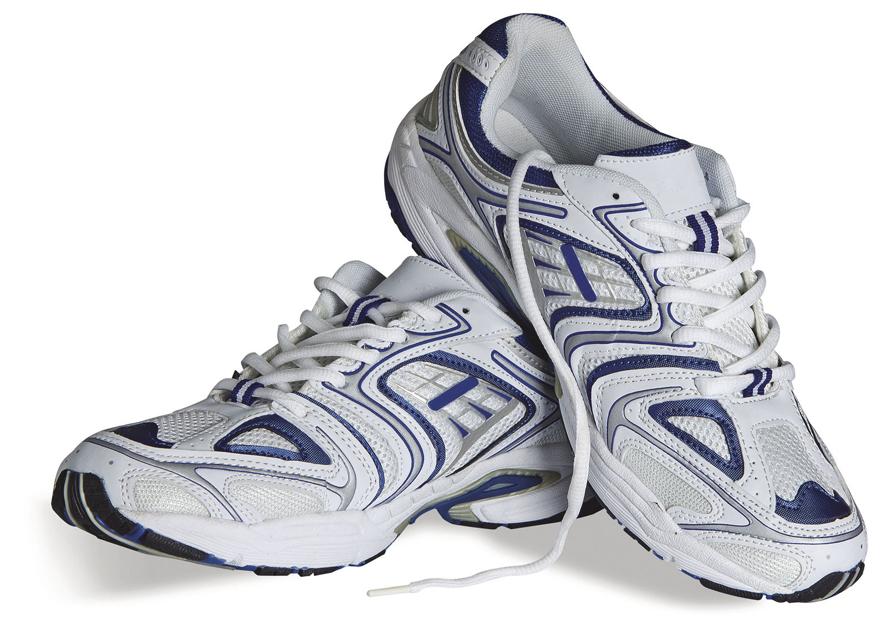 Wearing ill-fitting shoes while playing sports or working out increases your risk of injury considerably. But how do you choose the right pair? Here are some tips to start you off on the right foot. 1. Consider your needs. If you take part in the same sport three or more times a week, a pair of specialized shoes is your best option. However, if your activities are more varied, multi-sport shoes will be a better fit. In any case, you still need to consider certain specific needs. For instance, shoes with superior ankle support are recommended for sports that involve lots of lateral movement, while models that provide maximal stability are better suited to strength activities. An in-store specialist will be able to point you in the right direction. 2. Shop later in the day. Because your feet swell as the day progresses, it's a good idea to shop for shoes in the late afternoon to avoid buying a pair that feels too tight at times. 3. Bring your socks. When trying on different shoes, have on the type of socks you usually wear during your sporting activities. This will provide you with the most accurate assessment of comfort. 4. Don't rush. Take the time to walk around the store wearing both shoes (not just one of them — most people's feet aren't exactly the same size), and don't be shy to try a few movements typical to your sport of choice (e.g. jumping or pivoting). 5. Look for instant comfort. If a pair of shoes isn't comfortable when you first try it on, no amount of "breaking in" will make it right for your feet. Make sure the shoes you choose are the right width, leave enough room to wiggle your toes and don't let your heel slip out.  |
| Winter boots for ice, snow OK with shoes at workplace - Arkansas Democrat-Gazette Posted: 26 Jan 2020 12:16 AM PST  Q The snow is a-coming and I'm not slipping rubber covers over my work shoes. So, I'm wondering if it is acceptable to wear winter boots with dress pants and then change into office shoes once you get to the office? Or is changing shoes at work unprofessional? A Changing shoes when you get to the office in winter is not at all unprofessional; it is an intelligent thing to do. If you follow my usual advice and buy the very best shoes you can afford (wear them, enjoy them and take care of them), then you certainly don't want to ruin those good shoes by wearing them while trudging through rain or snow. Since you don't like rubber overshoes, you can wear rugged outdoor boots on your commute, then change from them to indoor, business-appropriate shoes once you reach your office. I can understand your reluctance to wearing the rubber covers: not only are they often on the clunky -- if not ugly -- side, but they may not be high enough to protect your shoes in snow. I also understand why you may not want to carry a bag with your at-work shoes to and from the office. One way to avoid carrying shoes is to select a pair that will work in most business situations (not your very best pair, but ones that are versatile enough to go passably well with most of the clothes you wear at work). Keep them stored in a drawer or a closet at work. If you are meeting an important client or going to an early meeting and refuse to carry extra shoes to change into, here are a few options: Cordovan: One of the best types of dress shoes you can own for the snowy season is anything made of cordovan leather. Quality dress shoes are generally made of calfskin, suede or cordovan. Fine calfskin is the most refined, but it scuffs easily, readily shows damage and is not designed for bad weather. Suede is even more allergic to bad weather. It can actually be ruined if worn in rain or snow. On the other hand, cordovan is an equine leather that is naturally weather-resistant. It is thick, durable and probably the strongest leather you can find. Cordovan shoes are expensive, but they have advantages that make them worth the investment: they always look shined; they don't develop creases; though too rugged for elegant dressy suits, they're not too casual for most business wear; and they last forever. Shoes with a rubber sole: If your work environment is somewhat casual, and if you do not have a high-level meeting planned for the day, a rubber sole shoe that prevents water from seeping in and dries quickly will often be work-appropriate (be sure to add extra waterproofing protection before putting them on). Several companies make shoes that look like fine dress shoes but have the extra traction of a rubber sole. Waterproof leather boots: Waterproof leather boots in a style that has a higher ankle to keep your feet dry no matter what the weather have a rugged style while still looking appropriate for the more casual office. They often have an extra layer of waterproofing as well as rust-proof hardware. Slip-on rain galoshes: Maybe you dislike rubber overshoes because you have not seen some of the newer slimmer styles. You can still wear your favorite work/dress shoes even when it's snowing if you choose galoshes that fit sleekly over your shoes; then just take them off when you get to work. A few styles made by SWIMS are highly stretchable, tear-resistant and will insulate your feet from the cold. Many of these weatherproof overshoes are inexpensive (in the $30 range) and are a great way to protect your $300 to $400 shoes from rain, snow and salt damage. They fit over every shoe style and size. Another brand to check out is Tingley Totes. Please send your men's dress and grooming questions to MALE CALL Lois.Fenton@prodigy.net High Profile on 01/26/2020  |
| In My Own Shoes: What getting older really means - The Westerly Sun Posted: 25 Jan 2020 08:30 PM PST  If getting old means being stared at because I still say "Please, thank you, good morning, and I'm sorry," then I want to get old! If getting old means people might open a door for me in public or help me carry something heavy, I promise I will not be insulted. I welcome it and wish more people would be more considerate of each other, regardless of their age. Opening a door can open doors. If getting old means still having a friend from childhood — and that means 50 years or more of laughing together, crying together, playing together, fighting together, making up together, and sharing every experience good or bad together through the years — then bring on old age! I consider our friendship far more important and wonderful than a slower gait or a bunch of gray hairs; and who cares if we don't see each other all that often. When we do, it's as though time and age have never touched us. We just pick up from where we left off the last time, and it's very, very special. If getting old means I won't be able to walk as fast, that's okay. When you walk more slowly, you see so much more than when you're rushing around like a maniac. You have time to appreciate a beautiful sunrise, you notice how green the grass can be after a rainstorm, you see life coming at you because you're not so busy rushing at it and through it to get somewhere else to do something else that when you come right down to it, really isn't all that important after all. If getting old means you qualify for Social Security and Medicare, you get mail from AARP, and stores offer you senior citizen discounts without your asking for them, that's great. It means we have a government and a society that cares enough about us to help us out, regardless of who's in office at the moment and what your political leanings are. If getting old means our hair turns gray or we have less of it ... if it means the waistline thickens and you get brown spots and wrinkles, bring it on! As for me, I think I earned them, each and every one of them. They're my badge of honor for a life well-lived, so the brown spots are just my childhood freckles exploding a bit, and the wrinkles are from smiling at every dog I ever met and laughing at the silliness of children I have played with and loved all along the way. If getting old means sitting around telling stories from the past … that's just exactly what I want to do. I want to tell my stories, and I want to hear yours. And if we forget some of the details like specific dates and names, or get the memories all mixed up about who or what came first, it won't really matter, because how a memory feels is far more important than being exact about the details. Memories aren't about actual names, numbers, and dates, anyway, they're about, well, memories. So make it a point to go out and find some kid with a stud in his nose and a purple streak in his hair … maybe, God forbid, it's your grandchild. But so what? Who are they hurting? Who were you hurting when you wore a tie-dye shirt and flowers in your hair, or when you teased your hair, sprayed it stiff, and wore bobby socks with penny loafers? So grab that kid and tell them a story; and if they roll their eyes and mutter, "Whatever," tell them another. Just keep telling those stories and keep alive the people, the places, and the memories that have made up the fabric of your life. Because one day in the future that same kid will wonder why they ever wore that stud in their nose … and the purple in their hair will be covered with gray … and they'll forget the "whatevers," and remember the "whomevers" and the "wherevers," because YOU took the time to tell them about it. So, keep telling your tales ... from the kitchen table stories to the parlor talk to the ones you told over the backyard fence … to the ones you lived for and fought for, and even the ones whose details you've forgotten a bit, but still feel so good. Then together we'll cross the bridge into old age, but YOU go first! Rona Mann has been a freelance writer for The Sun for 18 years, including her "In Their Shoes" features. She can be reached at six07co@att.net or 401-539-7762.  |
| You are subscribed to email updates from "shoes" - Google News. To stop receiving these emails, you may unsubscribe now. | Email delivery powered by Google |
| Google, 1600 Amphitheatre Parkway, Mountain View, CA 94043, United States | |






0 Yorumlar